
In ayahuasca work, healing is not shaped only by the medicine itself.
It is also shaped by the environment in which the experience is held.
For many people, one of the first things they notice when arriving at a retreat is not only the ceremonial space, but the silence around it. The forest sounds different from city life. The pace is different. The air feels different. Even before ceremony begins, the body often starts to recognize that it has entered another rhythm.
This matters more than it may seem.
In many retreat settings, silence and nature are not just beautiful details surrounding the experience. They are part of what helps support it. They create the conditions for deeper listening, greater sensitivity, and a more honest encounter with oneself.
More than a quiet place
Many people come to ayahuasca carrying noise they no longer notice.
Not only external noise, but internal noise:
constant thought,
pressure,
stimulation,
mental speed,
unfinished emotion,
the habit of distraction.
When that noise begins to lessen, something changes.
This is one reason why silence can feel powerful, and sometimes even uncomfortable, before or after ceremony. It creates space for what daily life often keeps hidden.
A quiet place is not only restful.
It can also be revealing.
Why silence matters
Silence is not simply the absence of sound. In a deeper sense, it is a condition that makes listening possible.
Without silence, it is harder to notice what the body is feeling.
Harder to notice what the mind is avoiding.
Harder to feel the emotional undercurrents that have been waiting beneath the surface.
In ceremonial work, silence often helps create the inner space needed for the process to unfold with more depth.
This does not mean every moment must be rigid or empty. It means that when noise is reduced, the person often becomes more available to what is truly happening inside.
For some, this feels peaceful.
For others, it feels intense.
For many, it is both.
The forest changes the nervous system
Nature affects people in direct ways, even before they can explain it.
The body often responds to trees, open sky, water, humidity, birds, wind, and natural rhythm with a kind of slowing down. Breathing changes. Attention changes. The nervous system begins to shift out of constant alertness.
This can be especially important for people who arrive feeling anxious, overstimulated, or emotionally exhausted.
The natural world does not usually rush.
It does not demand performance.
It does not ask you to explain yourself.
For many people, simply spending time in the forest begins to soften something inside them.
That softening can make the ceremonial process more approachable.
Silence before ceremony
Before ceremony, silence can begin preparing the space inwardly.
When a person speaks less, moves more slowly, and spends time in quiet reflection, they may begin to notice what is already present before drinking.
Fear.
Expectation.
Restlessness.
Grief.
Hope.
Resistance.
Prayer.
This is one reason why preparation is not only about instructions or diet. It is also about learning to become quiet enough to hear what is already there.
Ceremony often does not begin with the cup.
It begins when a person stops running from inner noise and starts listening.
Nature during the retreat process
The retreat environment itself can become part of the support.
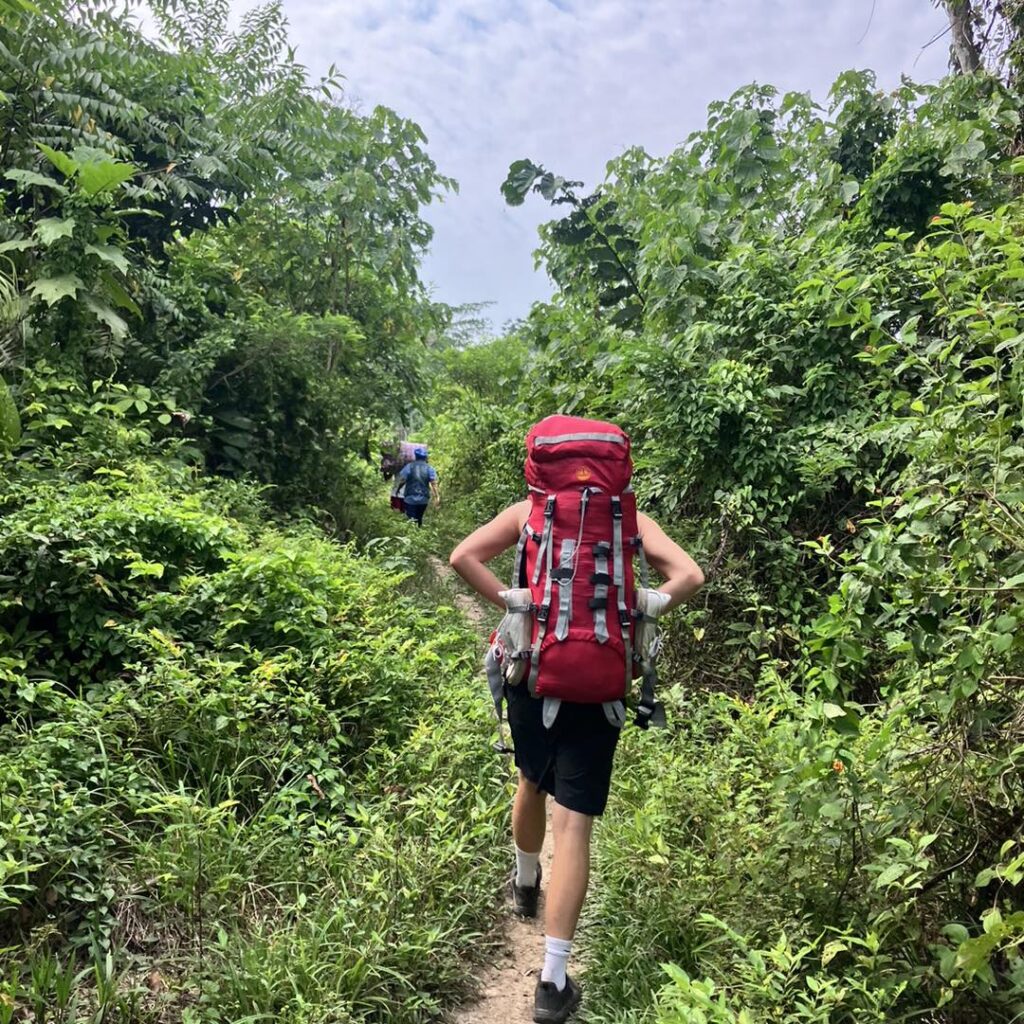
Walking slowly through the forest,
resting in a simple space,
hearing birds at dawn,
sitting near trees,
watching the sky change,
remaining in contact with the natural world between ceremonies—
all of this can help the person stay connected to a more grounded rhythm.
This matters because ayahuasca work can be emotionally intense.
A supportive environment helps the process breathe.
The forest does not interpret the experience for you.
But it can hold you in a quieter kind of way.
During ceremony: the role of atmosphere
During ceremony, atmosphere shapes experience.
The light,
the air,
the stillness,
the silence between songs,
the feeling of being surrounded by the living night—
all of these can influence how a person receives the process.
In a serious ceremonial setting, the space is usually not arranged as spectacle. It is arranged to support inwardness.
Nature helps here too.
The sounds of insects, wind, rain, and distant forest life can become part of the atmosphere of the night. For some people, this deepens the sense that the ceremony is not happening in isolation, but in relationship with a larger living world.
After ceremony: why stillness matters
The hours and days after ceremony are often delicate.
Some people feel open.
Some feel tender.
Some feel quiet.
Some feel emotionally raw.
Some feel clear in a way they are not used to.
This is a time when silence and natural space can be especially valuable.
After ceremony, too much stimulation can pull a person away from what is still unfolding inwardly. Phones, pressure, constant conversation, and rapid activity can make it harder to integrate what the experience has opened.
Stillness helps the experience settle.
Not because it gives immediate answers, but because it protects the process from being drowned out too quickly.
Silence is not emptiness
Some people fear silence because they imagine it means loneliness, boredom, or nothingness.
But in ceremonial work, silence is often the opposite of empty.
It can be full of memory.
Full of emotion.
Full of sensation.
Full of truth.
What makes silence difficult is often not its emptiness, but its honesty.
When daily distraction falls away, a person may begin to hear what has been waiting underneath.
This is why silence can be healing, even when it is not immediately comfortable.
Nature as teacher
In many Amazonian ways of understanding, the forest is not only scenery. It is part of a living relationship.
Plants, water, sounds, rhythm, and place are not always treated as background. They are approached with more attention, and often with more respect, than many people are used to.
Even for visitors who do not come from those traditions, time in the forest can shift perspective.
Nature teaches patience.
It teaches scale.
It teaches rhythm.
It teaches that not everything unfolds on demand.
This can become part of the learning of the retreat itself.
Why this matters in modern life
Many people seek ayahuasca while living in worlds filled with speed, overstimulation, and emotional fragmentation.
They may not only need insight.
They may also need a different rhythm.
Silence and nature help restore that rhythm.
They remind the body that life does not always have to be urgent.
They remind the mind that not every question must be solved immediately.
They remind the heart that healing is sometimes less about intensity and more about space.
This is one reason why the environment of a retreat matters so much.
Final reflection
Ayahuasca work is often remembered for the ceremony itself, but the surrounding conditions matter deeply.
Silence matters.
Nature matters.
Atmosphere matters.
Stillness matters.
For many people, the forest begins preparing them before the ceremony starts.
And after the ceremony, it helps them remain close to what the experience revealed.
The medicine may open the process.
But silence and nature often help hold it.
And sometimes, that quiet holding becomes part of the healing itself.