
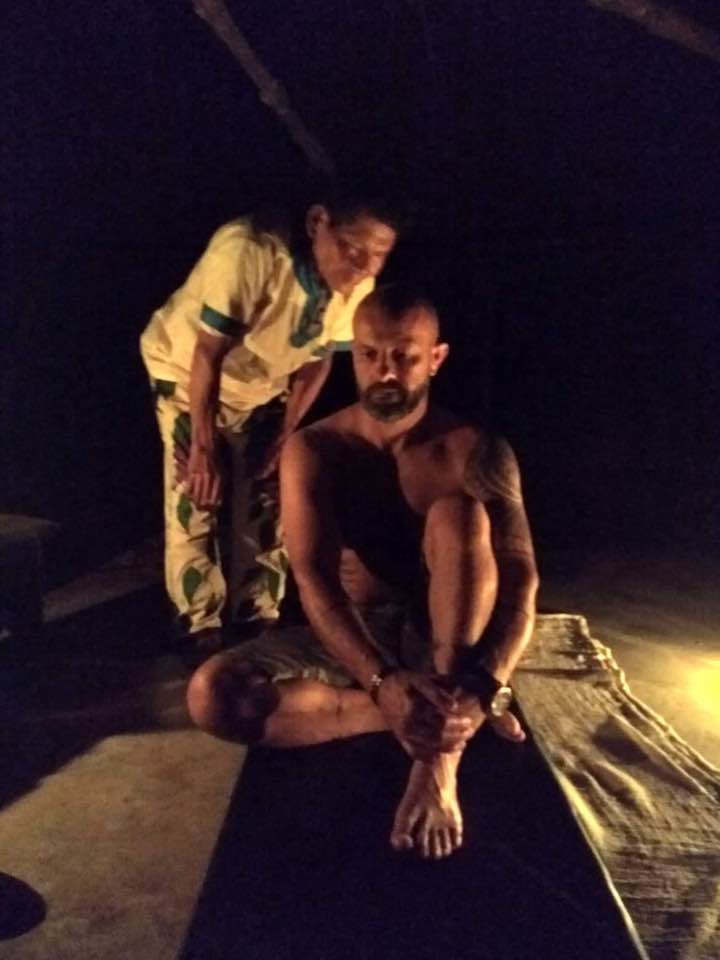
For many people, one of the most unforgettable parts of an ayahuasca ceremony is not only what they feel or see, but what they hear.
In many ceremonial spaces, icaros become part of the deepest movement of the night. They are not usually experienced as simple background music. They are often approached as songs of guidance, prayer, relationship, and presence.
For first-time participants, this can be difficult to understand at first. A person may enter the ceremony expecting the medicine itself to be the center of everything, only to discover that sound, silence, and listening also shape the entire experience.
To speak about icaros is to speak about something more than melody.
It is to speak about the ceremonial atmosphere, the intelligence of listening, and the way sound can become part of inner work.
What are icaros?
In ayahuasca ceremony, icaros are often understood as sacred songs used within the ceremonial process.
They may be sung by a healer, a guide, or a ceremonial practitioner according to the tradition and context of the work. For many participants, icaros are one of the most powerful and mysterious parts of the night because they seem to do more than fill the space with sound.
They can change the atmosphere.
They can focus attention.
They can calm, intensify, open, or redirect the experience.
Even when a person does not understand the words, they may still feel the effect of the song in a direct way.
More than music
One of the biggest misunderstandings is to think of icaros as performance.
In a ceremonial context, they are often not approached as entertainment. They are not usually meant to impress, decorate the night, or create a show.
For many people in ceremonial work, icaros are part of the function of the ceremony itself.
This is why the way they are received matters.
Listening to an icaro is often different from listening to a song in ordinary life. It asks for attention rather than consumption. It asks for presence rather than comparison.
You are not only hearing something.
You are entering relationship with what the song is carrying.
Why icaros matter during ceremony
Many participants notice that the experience shifts when the singing begins.
A room that felt uncertain may begin to feel more held.
A person who felt scattered may begin to feel more focused.
A difficult emotional moment may begin to move.
An intense inner process may become more navigable.
For this reason, many people experience icaros as part of the guidance of the night.
This does not mean that everyone experiences them in exactly the same way. Some people feel moved immediately. Others take time to open to them. Some feel comfort. Others feel challenge. Some feel the songs reach emotional places that words cannot easily touch.
But again and again, people remember them.
Icaros and the ceremonial atmosphere
Ceremony is not only shaped by what is in the cup. It is shaped by the whole container of the night.
The space.
The silence.
The healer.
The intention.
The listening.
The songs.
Icaros often help create that ceremonial container in a more tangible way. They can mark transitions in the night. They can help people remain inward. They can call attention back when the mind becomes distracted or when fear begins to take over.
In this sense, they do not stand outside the ceremony.
They help form the ceremony.
This is one reason why the atmosphere of a serious retreat matters so much. A ceremony is not only a private inner event. It is also a shared space shaped by discipline, listening, and care.
Sacred listening
Not everyone arrives knowing how to listen in a ceremonial way.
Many people come from environments full of constant stimulation, commentary, and mental noise. In that state, the first instinct may be to analyze the song, judge it, or treat it like something external.
But ceremonial listening is different.
It asks you to soften.
To receive.
To let the sound reach you before trying to explain it.
Sometimes the deepest response to an icaro is not intellectual at all. It may be emotional. It may be physical. It may be quiet. It may simply create the feeling that something inside is being touched, moved, or called into attention.
Sacred listening is less about understanding every detail and more about allowing yourself to be present with what the song awakens.
Silence and song
The role of icaros becomes even clearer when we understand their relationship with silence.
In a well-held ceremony, silence is not empty space. It is part of the work. It allows the mind to settle, the body to listen, and the ceremony to breathe.
When an icaro enters that silence, it often feels different from ordinary sound. It does not arrive into noise. It arrives into attention.
That is why both silence and song matter.
Too much noise can make the process shallow.
Too much mental activity can make it difficult to receive what is happening.
But when silence is respected, the songs can carry much more depth.
Why people remember them so deeply
Long after a ceremony, many people forget details of what they saw or thought. But they still remember the feeling of the songs.
This happens because icaros are often remembered not only as sounds, but as moments.
A moment of being guided.
A moment of feeling held.
A moment of emotional release.
A moment of unexpected calm.
A moment when the night seemed to open in a different way.
For some, the song feels like a bridge between fear and trust.
For others, it feels like the part of the ceremony that made them understand they were not alone.
This is why people often speak of icaros with reverence.
Icaros and respect for tradition
To speak about icaros respectfully also means remembering that they belong within living ceremonial traditions.
They are not merely aesthetic elements to borrow because they sound spiritual. They carry meaning within ways of working that are rooted in discipline, relationship, and ceremonial responsibility.
This matters.
The deeper a person becomes involved with ayahuasca, the more they often realize that the ceremony cannot be reduced to the brew alone. There is also the space, the preparation, the guidance, the listening, and the songs that help hold the process together.
Respect begins when we stop treating these elements as decoration and begin recognizing them as part of a larger ceremonial world.
You do not have to “understand” everything
Many first-time participants worry that they are missing something if they do not immediately understand the words, the structure, or the meaning of the songs.
But understanding does not always come first.
Sometimes what matters most is simply being willing to listen with humility.
You do not need to force interpretation.
You do not need to perform spirituality.
You do not need to pretend you understand something that is still new to you.
Sometimes the ceremony teaches through explanation.
Sometimes it teaches through feeling.
Sometimes it teaches through silence and song together.
Final reflection
In ayahuasca ceremony, icaros are often remembered because they seem to carry more than sound.
They carry atmosphere.
Direction.
Prayer.
Presence.
A way of helping the night move.
For some, they become the thread that helps them stay connected during difficult moments.
For others, they become the memory that remains long after the ceremony ends.
To listen to an icaro is not always to understand it immediately.
Sometimes it is simply to recognize that healing does not always speak in concepts.
Sometimes it sings.