
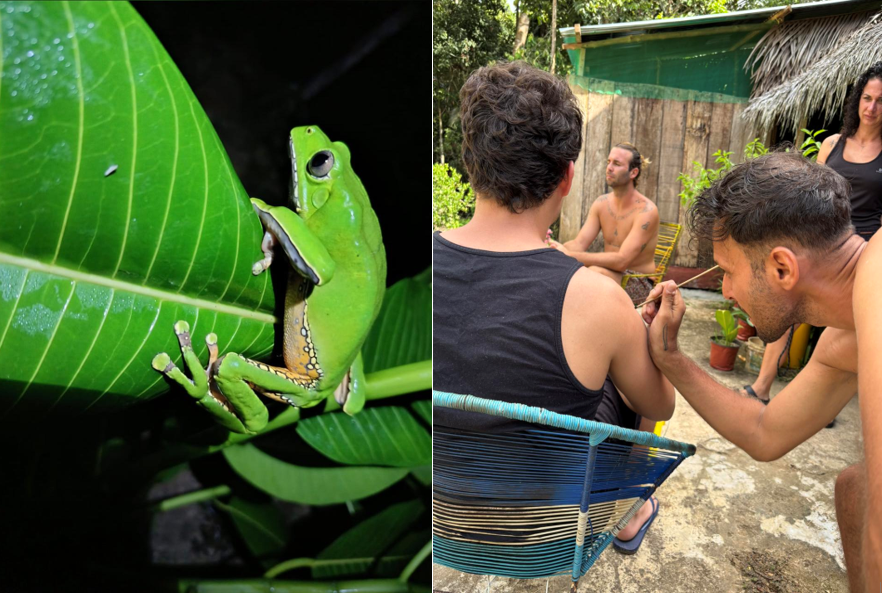
A Kambo ceremony in Iquitos can be part of selected Amazonian retreat experiences. For many travelers, Kambo is something they have heard about before arriving in Peru, but they may not fully understand what to expect, how to prepare, or why proper guidance matters.
At an Amazon jungle retreat in Iquitos, Kambo should be approached with respect, preparation, and honest communication. It is not a casual activity, and it is not suitable for everyone.
This guide explains what travelers should know before participating in a Kambo ceremony in Iquitos, Peru.
What Is Kambo?
Kambo is a traditional practice connected with Amazonian knowledge and the secretion of the giant monkey frog. It has been used in different Indigenous and local contexts, especially in parts of the Amazon.
In a retreat setting, Kambo is usually offered as a guided ceremony or traditional practice. It should not be presented as a guaranteed cure or medical treatment.
Travelers should approach Kambo with humility, caution, and respect for the cultural context in which the practice exists.
Why Proper Guidance Matters
Kambo should only be done with proper guidance and clear communication. The person guiding the ceremony should explain what will happen, what participants may feel, and what information must be shared before the ceremony begins.
Responsible guidance is important because Kambo can be physically intense. Participants may experience strong bodily reactions, and the experience should not be treated lightly.
If you are considering Kambo, always speak honestly with the retreat team before participating.
Is Kambo for Everyone?
No. Kambo is not for everyone. Some people should avoid it depending on their health condition, medication use, medical history, or personal situation.
Before participating, travelers should share relevant information such as:
- Heart conditions
- Blood pressure issues
- Medication use
- Pregnancy
- Serious medical conditions
- Recent surgery or major illness
- History of fainting or severe weakness
Do not hide health information. Honest communication is part of safety.
Also, do not stop prescribed medication without professional medical advice.
How Kambo May Be Included in a Retreat
At Ayaymama Mystic, Kambo may be included in selected retreat experiences, especially longer retreat programs. It is often offered as part of a broader Amazonian retreat rhythm that may include ceremonies, rest, food preparation, jungle walks, and integration time.
If Kambo is important to you, ask before booking whether it is included in your retreat package or available as an additional ceremony.
You can also read our guide about how many days you need for an ayahuasca retreat in Iquitos to compare different retreat lengths.
Preparation Before Kambo
Preparation for Kambo should be guided by the retreat team. Do not improvise. Follow the specific instructions given before the ceremony.
General preparation may include arriving rested, avoiding heavy food before the ceremony, drinking water as instructed, and sharing health information honestly.
Because every retreat may have its own way of organizing the ceremony, it is important to ask directly what you should do before participating.
What the Experience May Feel Like
Kambo can feel physically intense. Some people may feel heat, nausea, sweating, emotional release, tiredness, or other strong bodily sensations.
The experience is usually short compared with an ayahuasca ceremony, but that does not mean it is easy. It can be demanding for the body.
This is why Kambo should be approached seriously and never as a trend, challenge, or casual experiment.
Kambo and Ayahuasca Are Different
Kambo and ayahuasca are not the same. They come from different practices and involve different experiences.
Ayahuasca ceremonies are usually longer and are connected with visionary, emotional, spiritual, and reflective processes. Kambo is usually more physical and shorter in duration.
If a retreat includes both, the team should explain how they are organized within the program and what participants need to know before each one.
You can read more about preparation here: how to prepare before an ayahuasca retreat.
Safety Questions to Ask Before Participating
Before joining a Kambo ceremony, it is reasonable to ask clear safety questions.
- Who will guide the Kambo ceremony?
- What information should I share before participating?
- Are there health conditions that make Kambo unsafe?
- How should I prepare before the ceremony?
- What should I expect during the experience?
- What support is available afterward?
A responsible retreat should answer these questions clearly and without pressure.
Do Not Feel Pressured
No traveler should feel pressured to participate in Kambo. If you do not feel ready, if you have health concerns, or if something feels unclear, it is better to speak honestly with the team.
Respecting your own limits is part of responsible retreat participation.
A good retreat environment should support honest decisions, not force people into experiences they do not feel prepared for.
After the Ceremony
After Kambo, travelers may need time to rest. The body can feel tired or sensitive, so it is important to follow the retreat team’s guidance.
Rest, simple food, water as instructed, and quiet time may be part of the post-ceremony rhythm.
If you feel unwell or concerned after the ceremony, communicate with the team immediately.
Kambo Within the Amazonian Retreat Experience
For some travelers, Kambo is one part of a broader retreat journey. The full experience may also include jungle walks, meals, rest, floral baths, ayahuasca ceremonies, and time for reflection.
It is better to see Kambo as part of a larger context, not as an isolated attraction.
You can also read about the medicinal plants walk in Iquitos and the floral bath at an ayahuasca retreat in Iquitos.
Final Advice
A Kambo ceremony in Iquitos should be approached with respect, preparation, and clear communication. It is not for everyone, and it should never be treated as a guaranteed cure or casual activity.
If you are considering Kambo, ask questions, share your health information honestly, and follow the guidance of the retreat team.
To learn more about the retreat setting, visit our page about the Amazon jungle retreat in Iquitos, Peru.